In a publishing landscape where picture books are no longer confined to bedtime routines and polite attempts at getting children to sleep (often unsuccessfully), My Lucky Star by Cheryl Olsten arrives as both a timely and beautiful contribution to the bookshelf. And as a reflect of a broader shift in the industry. Picture books are not only thriving commercially, but also expanding culturally. Reaching readers well beyond their intended age bracket, including adults who might claim they’re just reading it for the child (your secret is safe here).
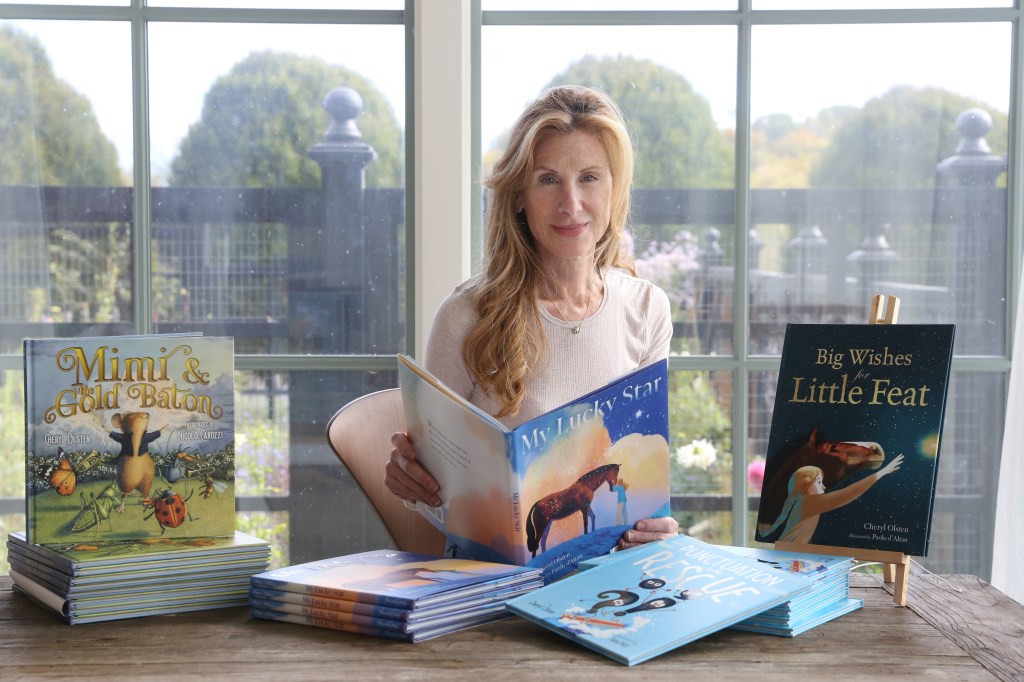
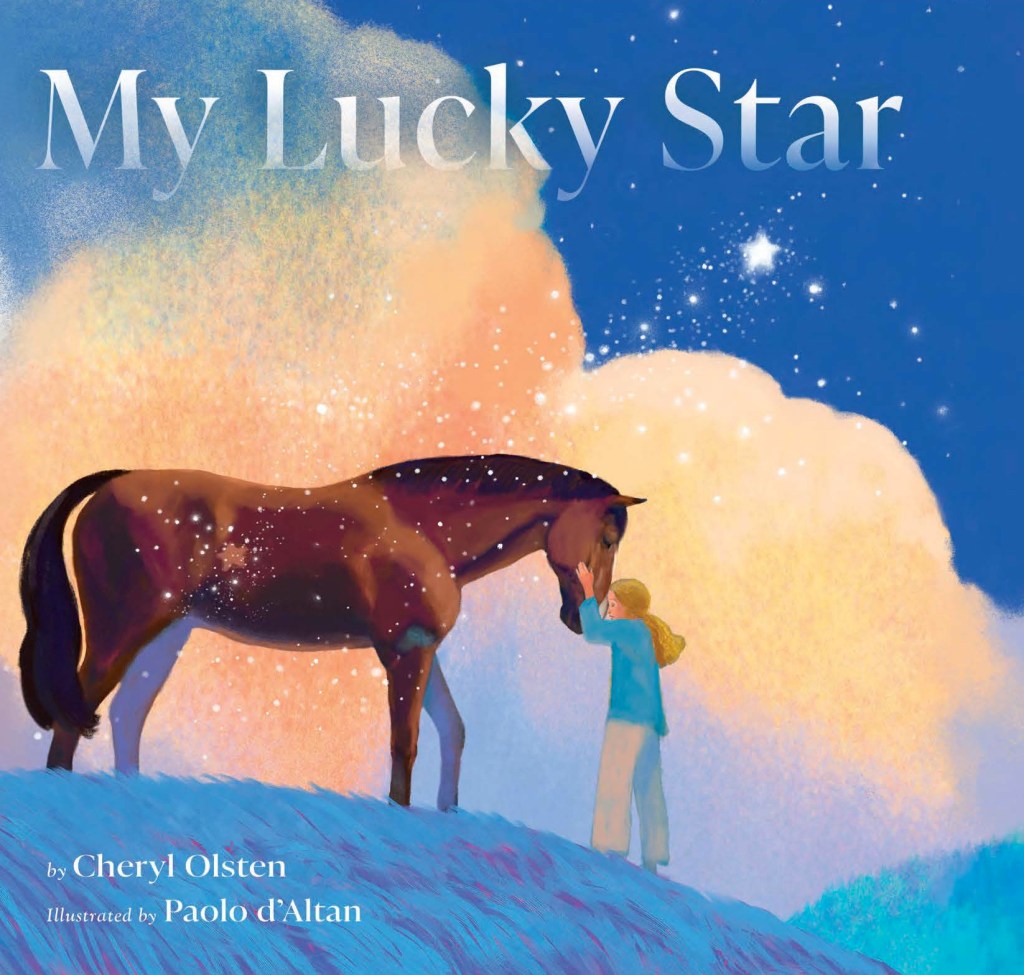
At its heart, My Lucky Star is a tender yet adventurous tale. It tells the story of Young Ella and her beloved horse, Little Feat, embarking on a celestial journey guided by the constellation Pegasus. A narrative strategy that blends mythology with emotional storytelling (which requires no prior knowledge of astronomy).
The plot is simple enough for a child to follow, yet layered with themes that resonate more broadly with us older kids. Like courage, companionship, and the quiet audacity of dreaming big.
The book’s emotional anchor lies in the relationship between the girl and her horse. Yet It’s not merely whimsical, it feels grounded in something relatable and deeply human. Their bond becomes the “mirror” that scholar Rudine Sims Bishop famously described as a reflection of connection and trust that readers, regardless of age, can see themselves in.
The visual language of a growing genre

Illustrated by Paolo d’Altan, the book’s artwork is nothing short of cinematic. Rich, textured spreads transform each page into an immersive experience—from starlit skies to the shadowy enchantment of the Black Forest. This is where My Lucky Star aligns perfectly with current trends: the increasing emphasis on visual literacy.
In an age shaped by screens and rapid visual communication, readers—especially younger ones—are learning to interpret images as much as words. Picture books like this are not simply “easier” alternatives to prose, they are sophisticated storytelling forms in their own right.
The interplay between text and image invites readers to decode emotion, pace, and meaning visually, making the reading experience both accessible and intellectually engaging.
And at this, the stable popularity of animated films, enjoyed by both little ones and adults, confirms the strong statement visual literacy is making.
Why picture books are booming
The success of books like My Lucky Star is not happening in isolation. Over the past decade, picture books and graphic narratives have seen a notable rise in both publication and sales. This growth reflects a shift in how we define reading itself.
Visual storytelling has become more inclusive. Particularly for reluctant readers or those who engage more naturally with imagery than dense text.
At the same time, the global children’s book market continues to expand steadily, with projections showing sustained growth over the next decade.
This is driven by a mix of factors like increased literacy initiatives, the rise of audiobooks and digital formats, and a renewed appreciation for independent bookshops and curated reading experiences. But perhaps most significantly, there is a growing recognition that children’s literature—especially picture books—serves all ages.
As Bishop suggests, these books act as “sliding glass doors”, allowing readers to step into new worlds with empathy. Which, in a cultural moment often marked by disconnection, that effect feels more necessary than ever.
A book for children (and the adults reading alongside them)
What makes My Lucky Star stand out is its ability to operate on multiple levels. For children aged 4–9, it offers adventure, magic, and reassurance. It encourages curiosity, frames learning as play, and subtly empowers young readers to see themselves as problem-solvers and storytellers.
For adults, however, it offers something quieter but equally valuable. A reminder of the power of imagination untethered by practicality. And of the kind of storytelling that prioritises wonder over cynicism.
This dual appeal is precisely why picture books are gaining traction beyond traditional audiences. Parents, educators, and even casual adult readers are rediscovering the form. Not just out of nostalgia, but because these books provide a distilled, visually rich way to engage with complex emotions and ideas.
The quiet power of wonder
In many ways, My Lucky Star encapsulates the evolving role of picture books today. It is visually ambitious, emotionally sincere, and pedagogically subtle. It doesn’t instruct so much as invites into a world where dreams feel possible and kindness carries weight.
As the market continues to grow and diversify, books like this remind us why the format endures. Not because it is simple, but because it is essential.
Would love to know what you thought of it. Get your copy at Amazon Books in paperback or digital.


 Little Chilean